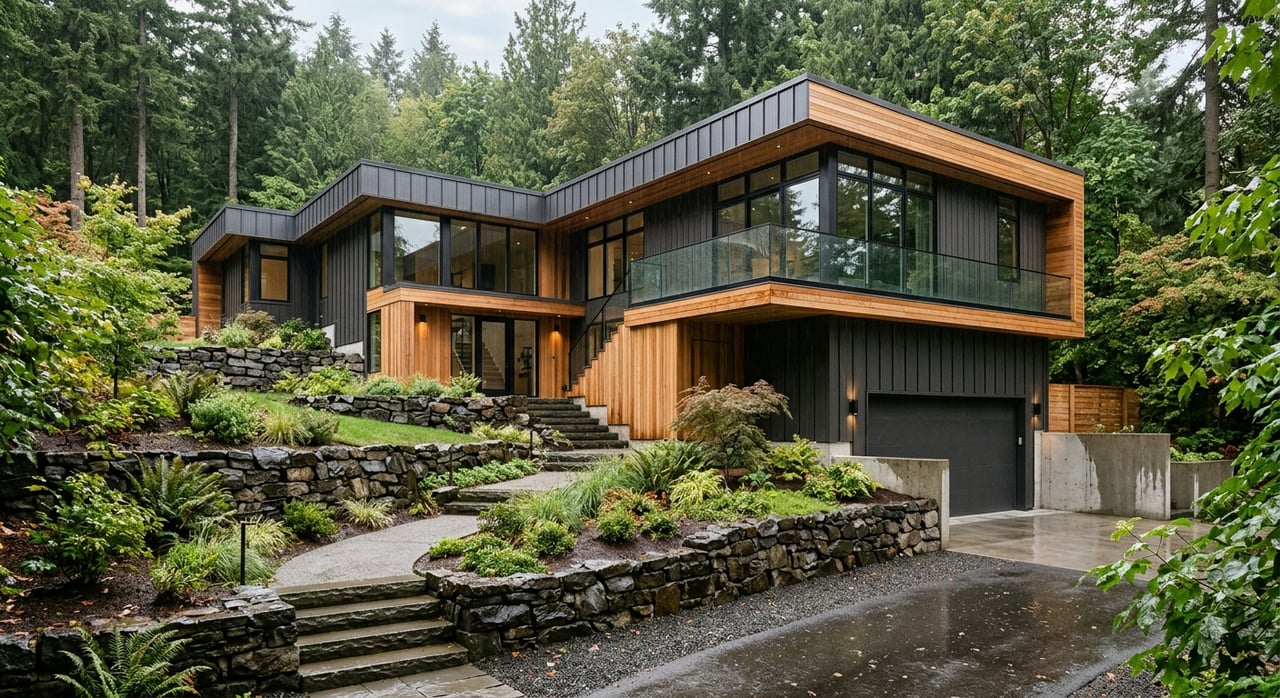
Wondering why one part of West Linn feels like a historic small town while another feels like a quiet ridge community with newer homes and big views? That contrast is a big part of what makes West Linn unique. If you are trying to figure out where you might fit best, understanding the city’s neighborhoods and common home styles can help you narrow your search and make smarter decisions. Let’s dive in.
Why West Linn Feels So Varied
West Linn is a compact city of about 7.6 square miles on the west bank of the Willamette River, roughly 15 miles south of Portland. Even with its smaller size, it does not feel uniform from one area to the next.
A lot of that comes from the land itself. West Linn includes river frontage, hills, and steep upland areas, with elevations ranging from 10 feet to 743 feet. In practical terms, that means your day-to-day experience can change a lot depending on whether you choose a river-edge pocket, a central neighborhood, or a ridge location.
The city officially recognizes 11 neighborhood associations: BHT, Bolton, Hidden Springs, Marylhurst, Parker Crest, Robinwood, Rosemont Summit, Savanna Oaks, Skyline Ridge, Sunset, and Willamette. These are open civic groups, not private HOAs, which is helpful to know if you are comparing neighborhood identity with neighborhood governance.
What Buyers Notice First
When buyers compare West Linn neighborhoods, the most useful filters are often not the neighborhood names alone. Instead, people usually focus on a few practical tradeoffs.
Those tradeoffs often include:
- River access versus ridge views
- Historic charm versus newer, lower-maintenance construction
- Single-level living versus more stairs
- Larger slopes and drainage considerations versus flatter lots
- Mature housing stock versus more recent development patterns
That is one reason West Linn can reward a more detailed home search. Two homes with similar square footage can feel very different depending on topography, lot layout, and the era in which the neighborhood developed.
Willamette: Historic Character
Why Willamette Stands Out
If you picture West Linn with the most historic character, you are probably picturing Willamette. The Willamette Historic District was listed on the National Register in 2009, and it remains the city’s clearest historic core.
This area is known for Victorian and early twentieth-century architecture. The district generally includes 1.5-story homes and is dominated by Queen Anne, Craftsman, and bungalow styles. A city survey also documented nearly 250 Willamette neighborhood properties built in 1965 or earlier, which helps explain why the broader area still feels mature and established.
Common Home Features in Willamette
In Willamette, buyers often notice details that are harder to find in newer areas. Depending on the home, that may include:
- Front porches
- Bay windows
- Decorative spindlework
- Taller rooflines or towers
- Period-specific trim and detailing
You may also see compatible infill mixed into the older housing stock. That means some homes are newer but were built to fit the feel of the surrounding historic area.
Bolton, Robinwood, and Sunset: Older Neighborhood Variety
Bolton: Mid-Century With Some Surprises
Bolton often appeals to buyers who want an older neighborhood feel without focusing only on historic-district homes. A city survey found 418 properties in Bolton, with 72% categorized as modern-period homes.
Ranches are the dominant style here, but the mix is broader than many buyers expect. You can also find split-levels, WWII-era cottages, minimal-traditional homes, Cape Cods, and some pockets of 1920s and 1930s bungalows and revival homes. That variety gives Bolton a more layered feel than a typical single-era subdivision.
Robinwood: Outdoor Access Matters
Robinwood stands out for lifestyle reasons as much as housing style. The neighborhood plan emphasizes river access, trail connections, and adjacency to Mary S. Young State Park.
For buyers who want outdoor access to be part of daily life, that can be a meaningful advantage. Robinwood also includes a mix of housing styles and types, so the area can work for more than one stage of life.
Sunset: Mixed Housing and River Proximity
Sunset is a more mixed southeast neighborhood with mostly single-family homes, along with some multifamily units and ADUs. The city’s plan and survey show a range of home styles here, including ranches, WWII-era cottages, minimal-traditional homes, bungalows, and a few older revival styles.
Some portions of Sunset near the Willamette River fall within the FEMA 100-year floodplain. If you are considering a home in that part of the neighborhood, it is smart to pay close attention to lot elevation, floodplain status, and how the specific property sits on the site.
Ridge Neighborhoods: Views, Slopes, and Layout
Marylhurst and Savanna Oaks
Marylhurst and Savanna Oaks sit on ridges overlooking the Willamette and Tualatin Rivers. Both areas have moderate-to-steep slopes, and both cite average ridge elevations around 550 feet.
For some buyers, that setting is a big draw. You may find a stronger sense of elevation, outlook, and separation from lower-lying areas. At the same time, slope can affect everyday practicality, including driveway steepness, yard use, drainage, and the number of stairs inside or outside the home.
Parker Crest and BHT
Parker Crest has a central location and more than 500 residences, giving it a neighborhood-scale feel within the city. BHT refers to the Barrington Heights, Hidden Creek Estates, and Tanner Woods subdivisions.
In these areas, buyers are often thinking less about historic character and more about subdivision-era planning, lot layout, and overall livability. For many households, this kind of neighborhood can offer a clearer sense of what to expect block by block.
Common Home Styles in West Linn
Historic and Early-20th-Century Homes
If you are drawn to older architecture, West Linn offers several styles that can feel especially distinctive. In and around the historic core, the most common styles include:
- Queen Anne
- Craftsman
- Bungalow
- Victorian
- Other early-20th-century forms
These homes often appeal to buyers who value design character and established surroundings. They can also come with more variation in floor plan, updates, and condition, which makes property-by-property evaluation especially important.
Mid-Century and Postwar Homes
Across older non-historic neighborhoods, you are more likely to see mid-century and postwar housing stock. Common styles include:
- Ranch homes
- Split-level homes
- Minimal-traditional homes
- WWII-era cottages
- Some Cape Cod homes
In practical terms, these homes often offer simpler floor plans and a more suburban feel. Depending on updates, they may also provide opportunities for buyers who want an established neighborhood without the same preservation-oriented considerations found in a historic district.
Newer Housing Types
West Linn is not only an older-home market. The city’s current planning docket includes proposals for cottage clusters, townhome development, middle-housing divisions, subdivisions, and other new housing-development applications.
That matters if you are hoping for something with more modern systems, a lower-maintenance setup, or a newer layout. While West Linn is known for its established neighborhoods, newer product types are also part of the local mix.
Parks, Trails, and Daily Lifestyle
In West Linn, neighborhood appeal is not just about the home itself. Outdoor access is a real part of how many buyers evaluate the city.
West Linn has more than 600 acres of park land and 25.6 miles of trails, and it participates in the Willamette River Water Trail. Mary S. Young Park and Camassia Nature Area Preserve are two standout examples, at 136 acres and 27 acres respectively.
If you enjoy walking trails, river access, or having natural space close to home, those features may shape your neighborhood decision as much as square footage or architectural style. In a city with this much topographic variety, access to parks and trails can make one area feel very different from another.
What Pricing Usually Reflects
Citywide, West Linn pricing sits in the high-$700,000 range based on the research provided. Zillow reported an average home value of $780,969, and Redfin reported a March 2026 median sale price of $775K.
At the neighborhood level, pricing differences often come down to a few specific factors rather than a simple neighborhood hierarchy. The biggest drivers usually include:
- View lots
- Slope and site usability
- Home age and condition
- River adjacency
- Renovation level
This is why it helps to compare homes through the lens of lifestyle and property features, not just by map location. In West Linn, topography and housing style can have a major impact on value.
How to Narrow Your Search
If you are trying to choose the right part of West Linn, start with how you want to live day to day. A beautiful home is important, but so is how the lot, location, and layout support your routine.
A few smart questions to ask yourself include:
- Do you want historic character or a more updated, simpler layout?
- Is single-level living important now or in the future?
- Would you rather have ridge views or easier access to riverfront areas?
- Are you comfortable with stairs, steeper driveways, or sloped yards?
- Do you want to be closer to trails, parks, or river recreation?
For downsizers especially, the tradeoff is often mobility versus setting. Ridge neighborhoods can come with stairs and slope-related considerations, while river-edge locations may call for closer review of floodplain and lot elevation details.
Making Sense of West Linn With Confidence
West Linn offers more variety than many buyers expect. You can find historic homes with original character, mid-century neighborhoods with practical layouts, and newer housing types that support lower-maintenance living.
The key is to match the neighborhood and home style to your priorities, not just your price range. If you want help comparing West Linn neighborhoods, weighing tradeoffs, or finding the right fit for your next move, Carrie Welch can guide you through the process with clear advice and local insight.
FAQs
What are the main neighborhoods in West Linn?
- West Linn officially recognizes 11 neighborhood associations: BHT, Bolton, Hidden Springs, Marylhurst, Parker Crest, Robinwood, Rosemont Summit, Savanna Oaks, Skyline Ridge, Sunset, and Willamette.
What home styles are common in West Linn?
- Buyers commonly find Queen Anne, Craftsman, bungalow, Victorian, ranch, split-level, minimal-traditional, WWII-era cottage, and some Cape Cod homes, along with newer townhomes and other housing types in the development pipeline.
What makes the Willamette neighborhood in West Linn unique?
- Willamette is West Linn’s clearest historic core, with a National Register historic district known for Victorian and early-twentieth-century architecture, especially Queen Anne, Craftsman, and bungalow homes.
What should buyers know about ridge neighborhoods in West Linn?
- Ridge areas like Marylhurst and Savanna Oaks can offer elevated settings and views, but buyers should also consider slopes, driveway steepness, drainage, and stair count.
What should buyers know about river-adjacent areas in West Linn?
- River-adjacent neighborhoods can offer access and scenery, but some portions of Sunset near the Willamette River are in the FEMA 100-year floodplain, so lot elevation and floodplain status deserve careful review.
What is the typical home price range in West Linn?
- As a citywide benchmark from the research provided, average home value and median sale price were both in the high-$700,000 range, though individual homes can vary based on views, condition, river proximity, and lot characteristics.