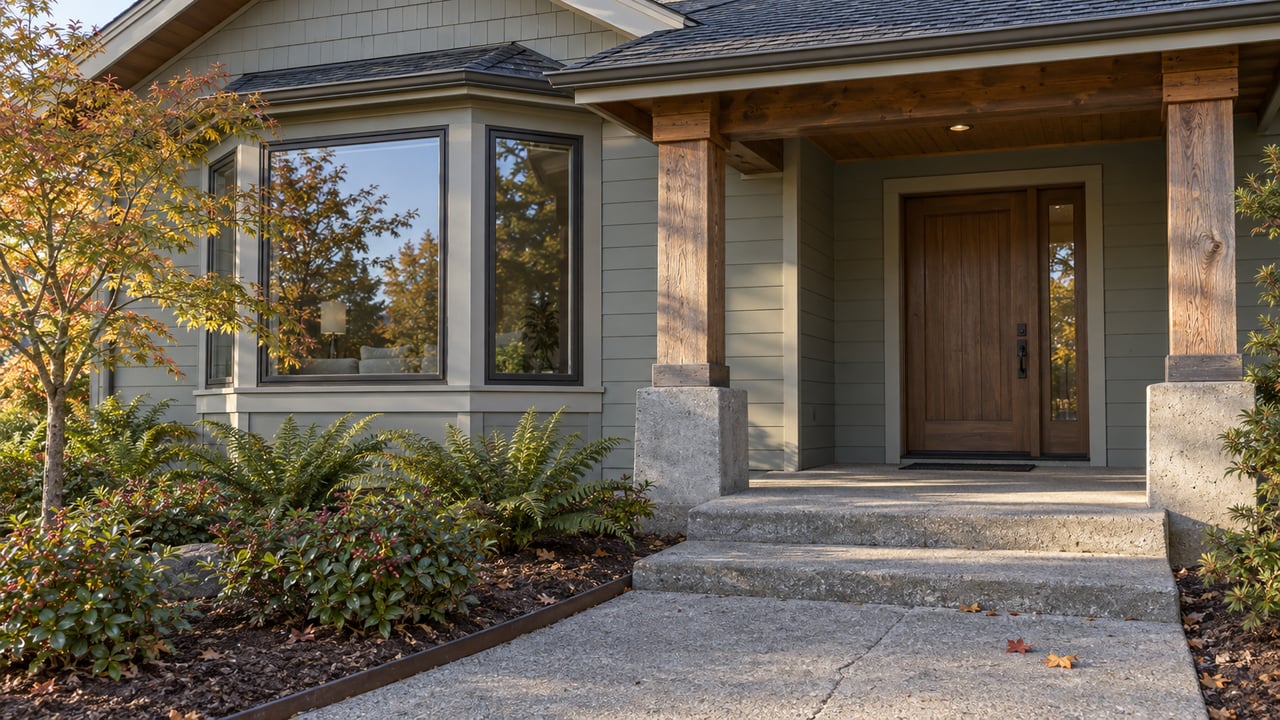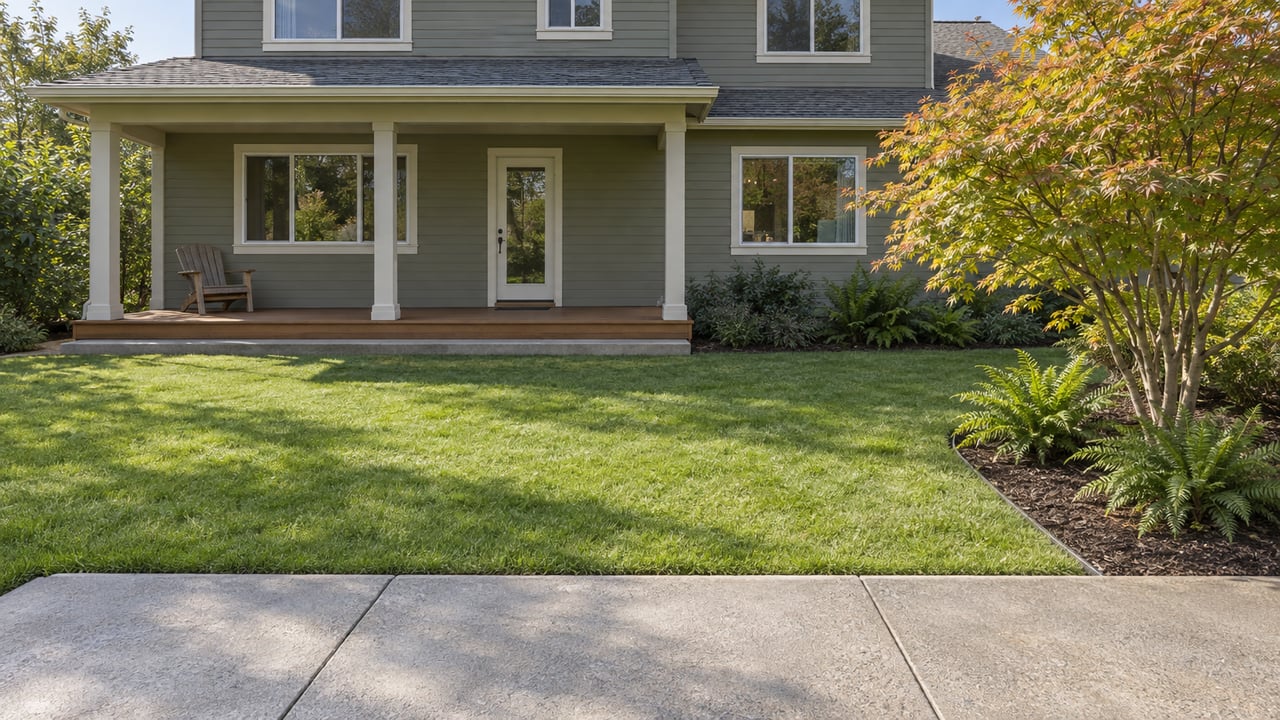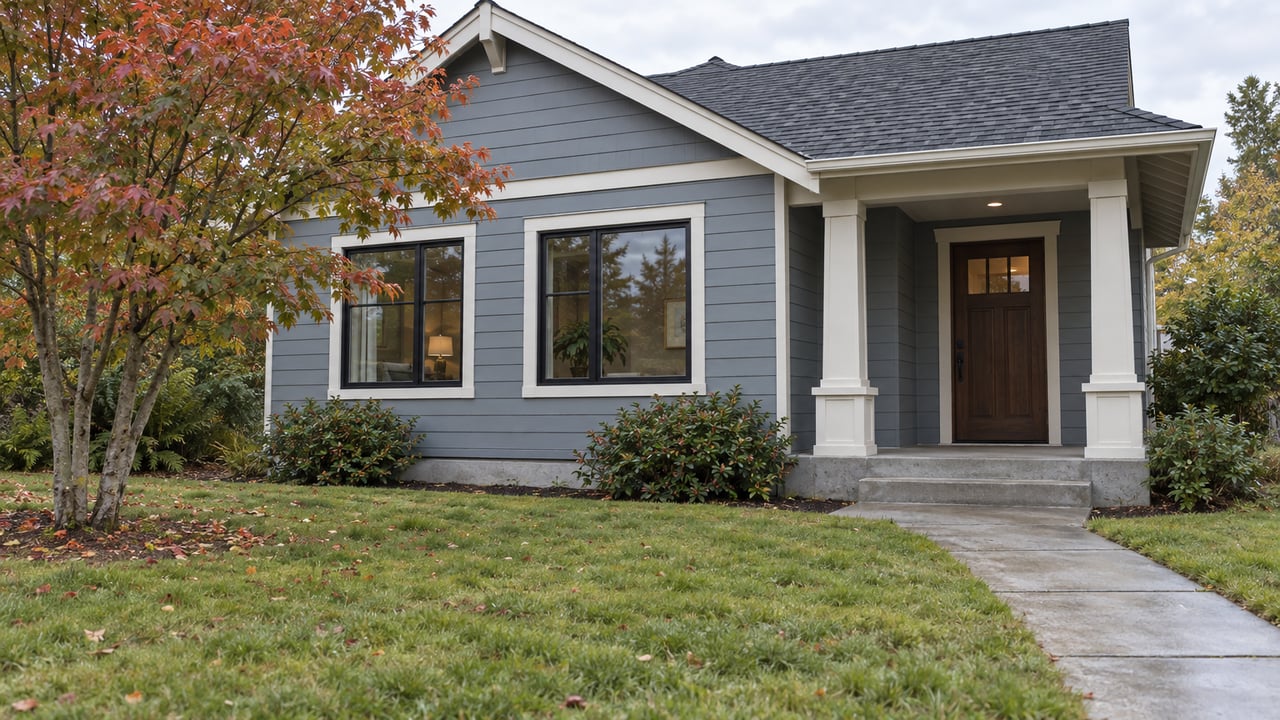
Picture two Hillsboro listings a few miles apart, both hitting the market the same week. One is a resale townhome near Orenco Station, built when the neighborhood's whole identity was walking distance to Intel's campuses. The other is a new-construction home in Reed's Crossing, the master-planned community rising south of Highway 26. Same city. Same school district boundary lines on a map. If you only looked at Hillsboro's citywide median price, you'd assume these two homes are competing in the same market and moving at roughly the same speed.
They aren't. And understanding why matters more this year than it has in a long time.
What the Citywide Number Actually Shows
The headline numbers on Hillsboro look almost boringly stable. Redfin's data for the three months ending June 2026 put the median sale price at $525,000, down 1.5% from the same period last year, with homes taking an average of 26 days to go to pending. Zillow's home value index, updated through the end of June 2026, showed the average home value at $520,244, down 2.9% over the past year, with homes going pending in around 37 days. Movoto's August 2026 snapshot showed a median list price of $575,000, at $299 per square foot, with homes spending a median of 87 days on the market.
Notice that none of those numbers quite agree with each other, and not because anyone is wrong. Redfin is measuring closed sales. Zillow is estimating value across the full housing stock. Movoto is tracking current active listings, which naturally include homes that have been sitting for a while. Those figures cover different reporting periods and use different measures, so their spread alone does not show that Hillsboro is an average of two different markets.
The neighborhood-level data below show distinct patterns across Hillsboro.
Intel Layoffs and Hillsboro's Housing Data
Over the last two years, Intel, Hillsboro's dominant employer since the 1970s, announced a series of layoffs. The cuts came in waves. Around 1,300 Oregon positions were eliminated in the fall of 2024. Then in July 2025, a layoff first disclosed as roughly 500 positions was revised within days to 2,392 jobs across four Washington County campuses, broken down as 1,521 from Ronler Acres, 519 from Jones Farm, 192 from the Aloha campus, and 160 from Hawthorn Farm, according to reporting from OPB. Another 669 positions across Hillsboro and Aloha facilities followed in November 2025.
Add it up and Intel cut more than 4,400 Oregon jobs across 2024 and 2025, roughly a fifth of its peak local headcount. The company's Oregon employment fell from around 23,000 workers at its high point to closer to 18,000 today, per OPB and KLCC. Axios reported that these were high-wage jobs, averaging around $110,000 a year, concentrated in the Hillsboro and Aloha area.
Hillsboro's mayor, Beach Pace, told Axios she still sees reason for optimism given new federal investment in the semiconductor sector, saying of the moment, "our job is to make sure we don't take that for granted." That optimism may prove out over a longer horizon. The housing data, meanwhile, show different patterns across the city.
Two Addresses, Two Markets
Orenco Station is the neighborhood built most literally around Intel proximity. It grew up in the 1990s alongside the MAX Blue Line, blending Craftsman-style homes with newer townhome and condo development, all within an easy walk of Ronler Acres and Jones Farm. It's also home to genuine neighborhood texture: Orenco Woods Nature Park, Hidden Creek Park with its "Oro the Friendly Giant" sculpture and pickleball courts, the annual OrenKoFest street festival, and a walkable strip of restaurants that includes Salam for Lebanese and Persian food and a New Seasons Market for groceries.
Over the trailing twelve months, the median sale price for houses in Orenco Station sits at $500,000, down 8% year over year, with homes taking an average of 73 days to sell against a national average of 58. Condos in the same footprint show a similar pattern: a 9% pullback with a 53-day average time on market. Townhomes land in between, down 8% with a 58-day average.
Reed's Crossing tells a different story. The 463-acre master-planned community south of Highway 26 has sold more than 1,470 homes since breaking ground in 2018, and its builders, which include David Weekley Homes, Holt Homes, Lennar, Richmond American Homes, and Stone Bridge Homes NW, project roughly 177 more sales in 2026 according to the community's year-end release. By the end of 2025, 20 of the 23 announced businesses in its Town Center retail area were open, anchored by a Market of Choice grocery store. This is a community built for a broad, multi-employer buyer base rather than one keyed to a single tech campus, and the city of Hillsboro's own planning documents show years of infrastructure investment, from a new bridge over Cornelius Pass Road to five potential future school sites, all predating the layoffs.
| Market pocket | What the price data shows | Time on market | What's driving it |
|---|---|---|---|
| Orenco Station resale (Intel-adjacent) | Median $500,000, down 8% over the trailing year | 73 days on average, versus a 58-day national average | Built around walkable proximity to Ronler Acres and Jones Farm; data show lower prices and longer marketing times |
| Reed's Crossing / South Hillsboro new construction | Builders project 177 new sales in 2026, following 1,470+ sold since 2018 | Fast enough that builders keep opening new phases and retail space | Master-planned, multi-employer draw with infrastructure built years before the layoffs |
| Citywide "Hillsboro" median (blended) | $525,000, down 1.5% over the same window | 26 days to pending on closed sales | A weighted blend of the two segments above, shifting with whichever one closes more homes in a given quarter |
Why New Construction Is Propping Up the Average
Here's the mechanism that makes the citywide number misleading rather than simply average. New construction has made up a steady 27.8% of all Hillsboro closed sales from 2023 through 2025, based on an analysis of RMLS closed-sale data. That share held roughly constant even as the Intel cuts rolled through. A construction pipeline doesn't stop and start with a WARN notice. It runs on its own multi-year clock.
That means every quarter, a batch of brand-new Reed's Crossing homes closes and gets folded into the same "Hillsboro" median as a 15-year-old resale in Orenco Station. Strip them out and look only at resale, attached, and condo sales, and the picture softens considerably, with steeper price movement and longer marketing periods in exactly the pockets closest to the affected campuses.
In plain terms: the city median isn't wrong. It's just measuring two different housing markets at once and reporting the blend as if it were one number.
What This Means If You're Shopping Hillsboro Right Now
If you're comparing neighborhoods on paper, the citywide figure will tell you almost nothing useful about what to expect on a specific street. Before you anchor a decision to a number you saw on a portal, it's worth asking a few more specific questions:
- Is this listing resale or new construction? The two are behaving differently enough that comparing them on price per square foot alone will mislead you.
- How far is it from an Intel campus, and does that distance still function as an amenity or as a liability in the current buyer pool?
- What's the actual time-on-market trend for that specific pocket over the last two quarters, not the citywide average?
- If it's new construction, how much of the surrounding retail and infrastructure is already open versus still being built out?
None of this means Orenco Station or similar neighborhoods are a bad buy. Longer marketing times and softer pricing can mean real negotiating room for a patient buyer, particularly for someone who values mature landscaping, established character, and walkability over warranty coverage on a brand-new roof. It does mean that pricing a listing or writing an offer based on the citywide average, in either direction, is likely to leave money or leverage on the table.
A Few Questions Worth Asking Before You Act
Does an 8% dip in Orenco Station mean prices there will keep falling? The current data covers the trailing twelve months, including a layoff cycle that ran through most of 2025. No portal-level statistic can predict whether that trend will continue.
Is new construction in South Hillsboro overpriced compared to resale? Not necessarily. The premium buyers are paying reflects warranty coverage, modern systems, and built-out community infrastructure rather than pure speculation. Whether that premium is worth it depends on your own priorities and timeline.
How do I find out which market my target neighborhood is actually in? The short answer is you look at sub-neighborhood data, not city-wide averages, and you look at whether the homes near you are new construction or resale. That's a conversation worth having with someone who tracks this block by block rather than reading it off a single citywide chart.
If you're weighing a move into Hillsboro, or trying to price a home you already own there, the neighborhood-level detail is where the real answer lives. Carrie Welch works this market street by street across Portland's west side, and a Free Home Valuation is a good place to start putting your specific address, not the citywide average, at the center of the conversation.